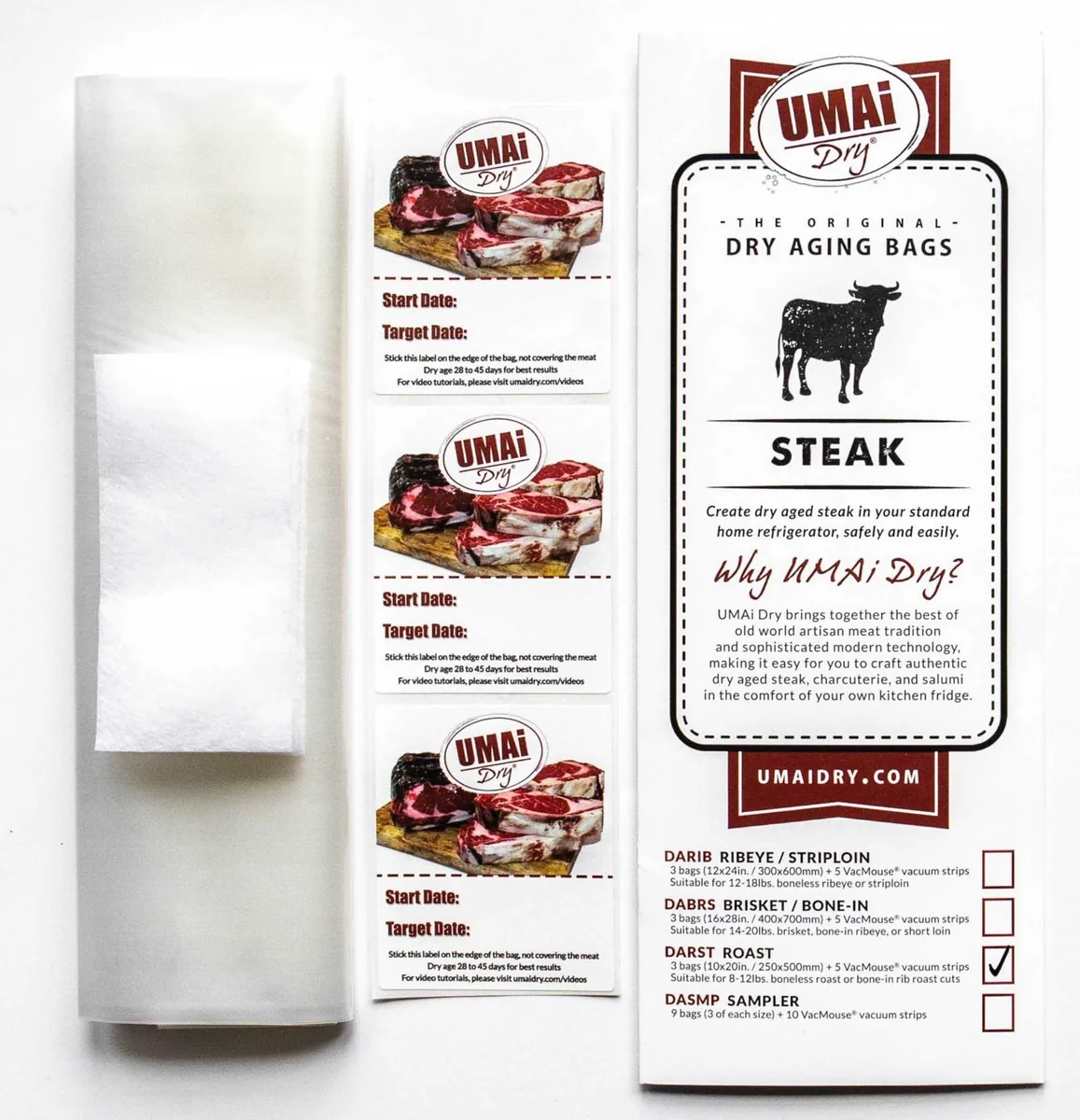
UMAi Dry~$26
UMAi Dry Dry Aging Bags Roast
Dry-aging bags · vacuum sealer recommended
- Largest cut
- 12 lb
- Price per bag
- ~$8.67
- 3 bags per pack
- 8-12 lb cuts
- 2-3 bone rib roast
Best for: Someone aging a holiday rib roast rather than a whole subprimal
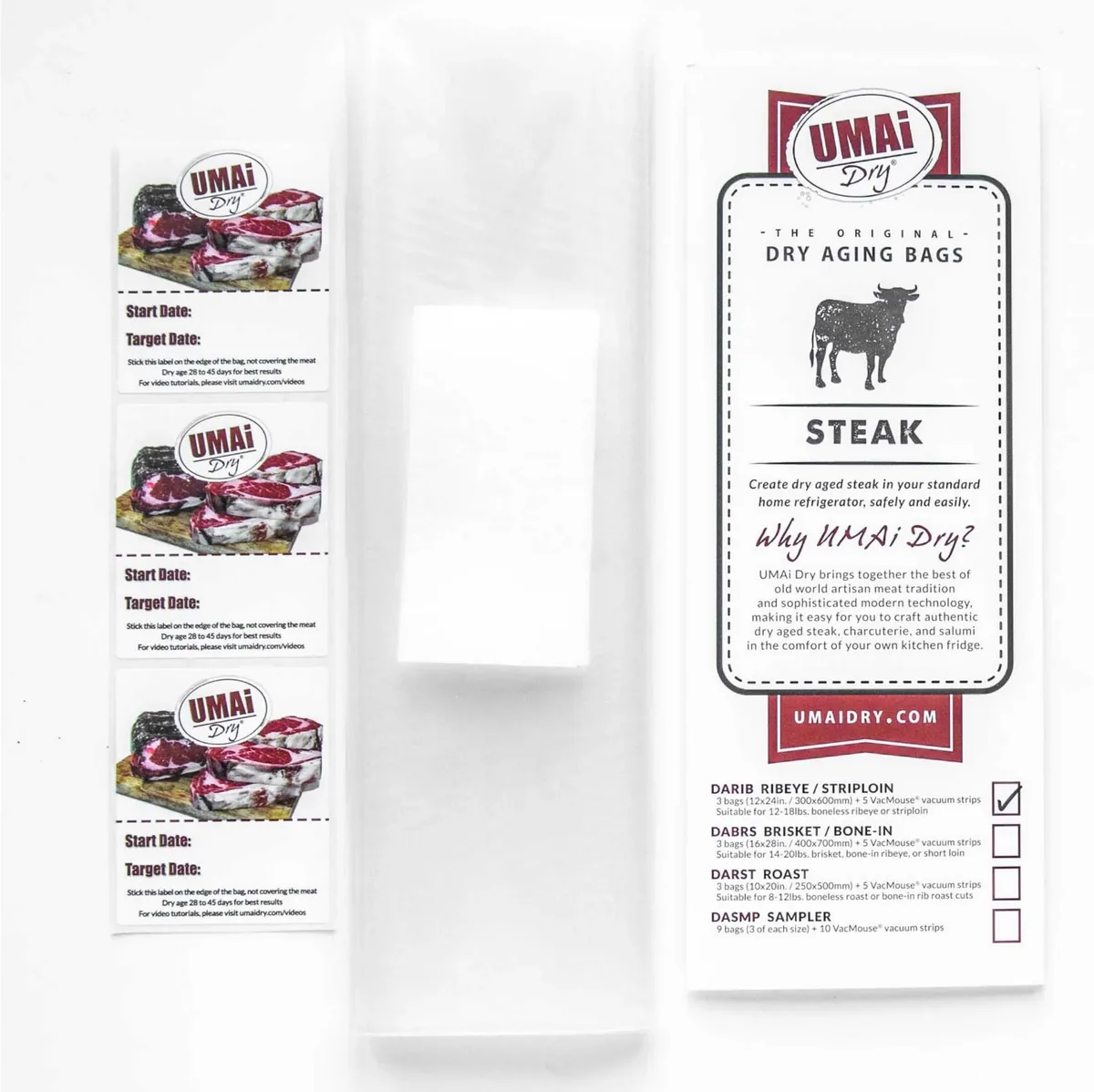 Dry-aging bags~$29
UMAi Dry
UMAi's core packet: three 12 x 24 in membrane bags sized for a boneless ribeye, striploin or sirloin subprimal of about 12-18 lb. The membrane bonds to the meat and passes moisture and oxygen, so the cut ages in an ordinary frost-free fridge. UMAi also sells the same three bags without the brochure as a cheaper restock packet.
Approx. price
~$29
maker's list price, not a live price
Best for: A first-time ager with a boneless ribeye or strip loin and a spare frost-free fridge shelf
Bags go in an ordinary refrigerator, so the fridge sets the temperature. Bags against a cabinet
The two lists above are drawn from the maker’s own pages and prices, not from owner reports. Where owner discussion has been read it appears in its own section below, so the two are never mistaken for each other.
From what 26 owners described in owner discussions between January 2019 and December 2024. Every UMAi bag uses the same membrane and owners rarely say which size they bought, so these are reports from owners aging whole boneless ribeyes and striploins in UMAi bags, the cuts this size is made for.
A whole ribeye or striploin, an ordinary fridge and no extra equipment is the appeal. Owners have run 32- to 60-day ages in kitchen fridges that get opened all day, and one owner who has sealed both with a machine and by pushing the air out under water found both ages turned out equally well.
Getting the bag closed is the step people struggle with: melted seams, sealers that will not trigger on the membrane, and bags that lift away from the meat in the first week. Once it is sealed, owners say about 80% contact is enough. Expect roughly half the starting weight back as trimmed steak: one owner turned 13 lb of ribeye into about 7 lb, another 14 lb into about 7.5 lb.
Flavor is where opinions split. Several owners got a beefier steak with little of the blue-cheese funk, while one found a 32-day ribeye funkier than expected. One owner who moved to a cabinet names less trim loss as the reason, and one who has aged both ways says a full setup is hard to justify at small volume.
No. Owners push the air out by lowering the bagged cut into a tub or bucket of water and close it with a zip tie, or simply a rubber band, and report good ages. If you do use a sealer, owners warn that it is easy to overheat the membrane and melt a hole in it.
About half, in owners' numbers. One owner's 13 lb ribeye gave about 7 lb of steaks after 32 days, another's 14 lb ribeye left about 7.5 lb after 36 days, and a 15.6 lb striploin aged 60 days ended at 7.2 lb trimmed.
Often milder. Owners describe concentrated, beefy and nutty flavor at around 45 days, and several expected more funk than they got. One owner found a 32-day ribeye funkier than expected, so results vary with the cut and the fridge.
It can. One owner's family asked for a ribeye to come out at day 32 because of the smell in the fridge, though that owner liked the nutty, forest-like aroma. Others ran ages in fridges they opened several times a day and mention no problem.
Owners disagree. One owner who has done 21 to 75 days in the bags found 35 the sweet spot and later ages disappointing, another prefers 45 days to 30, and one who has used them four times got the best results at 60.
Dry-aging bags · vacuum sealer recommended
Best for: Someone aging a holiday rib roast rather than a whole subprimal
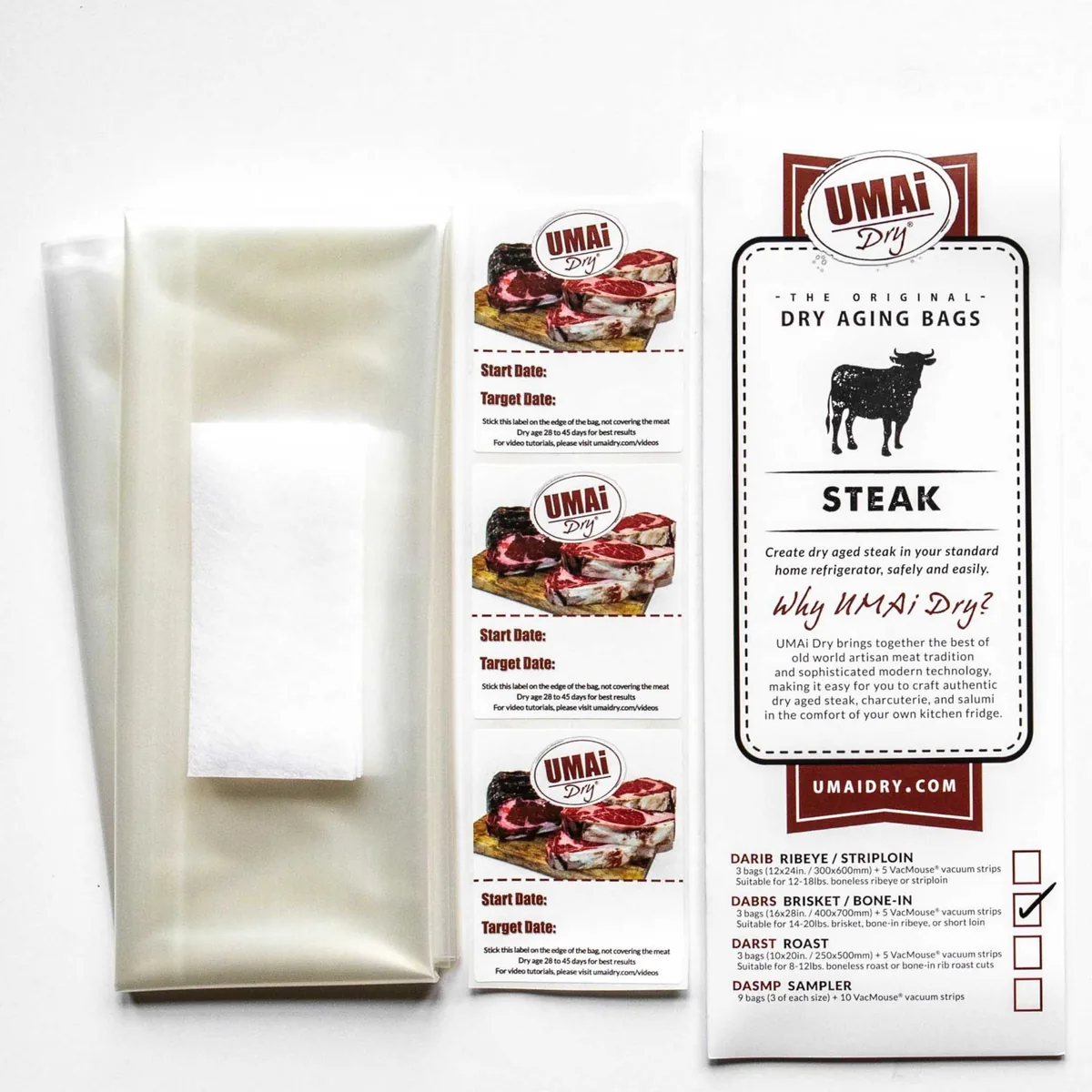
Dry-aging bags · vacuum sealer recommended
Best for: An ager working with bone-in rib sections, short loins or whole briskets
Dry-aging bags · vacuum sealer recommended
Best for: A small kitchen or frequent home ager doing many roast-size cuts