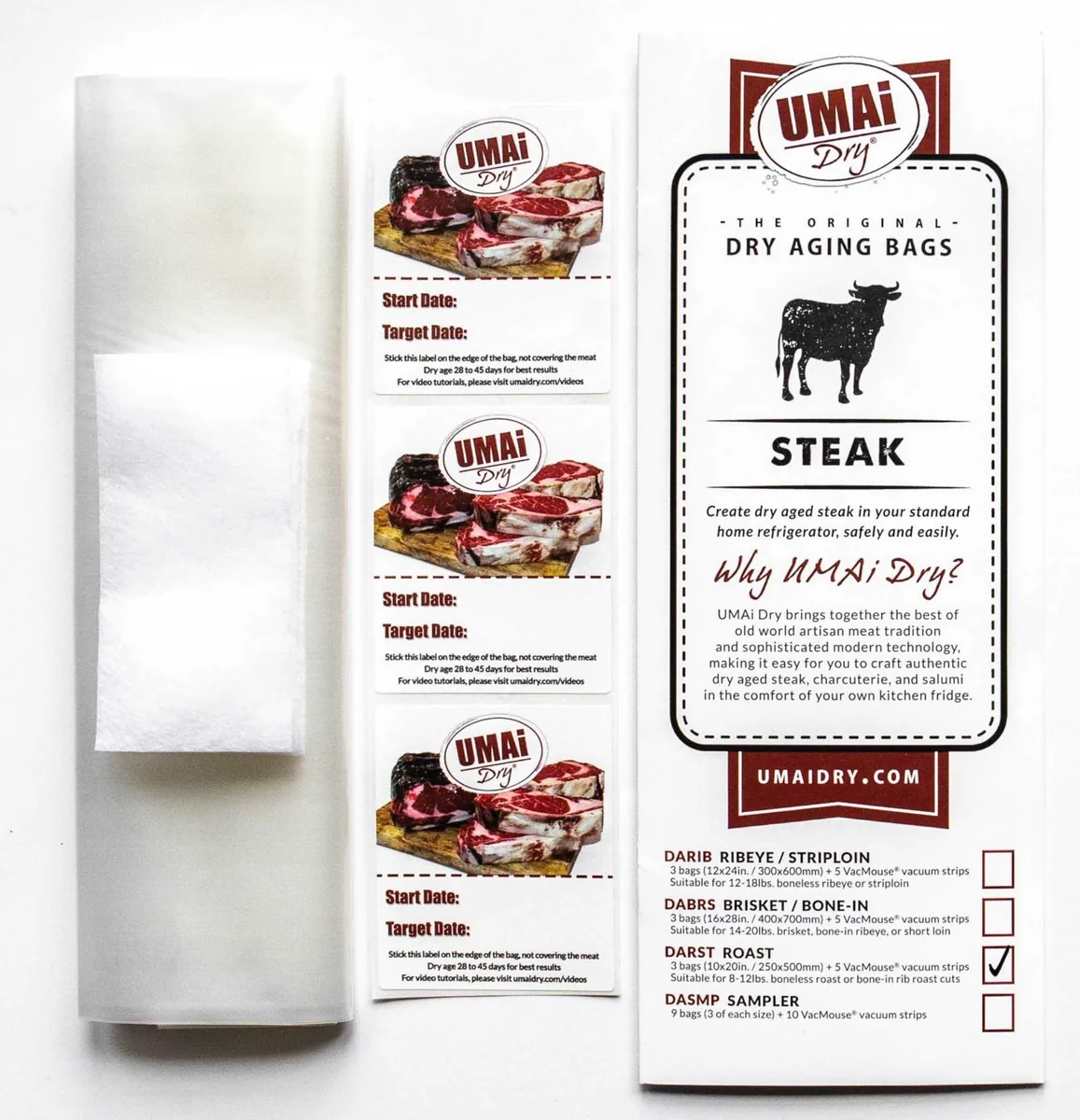
UMAi Dry Dry Aging Bags Brisket/Bone-in dry-aging bagsDry-aging bags~$34

UMAi Dry

UMAi Dry Dry Aging Bags Brisket/Bone-in

~$11.33 per bag

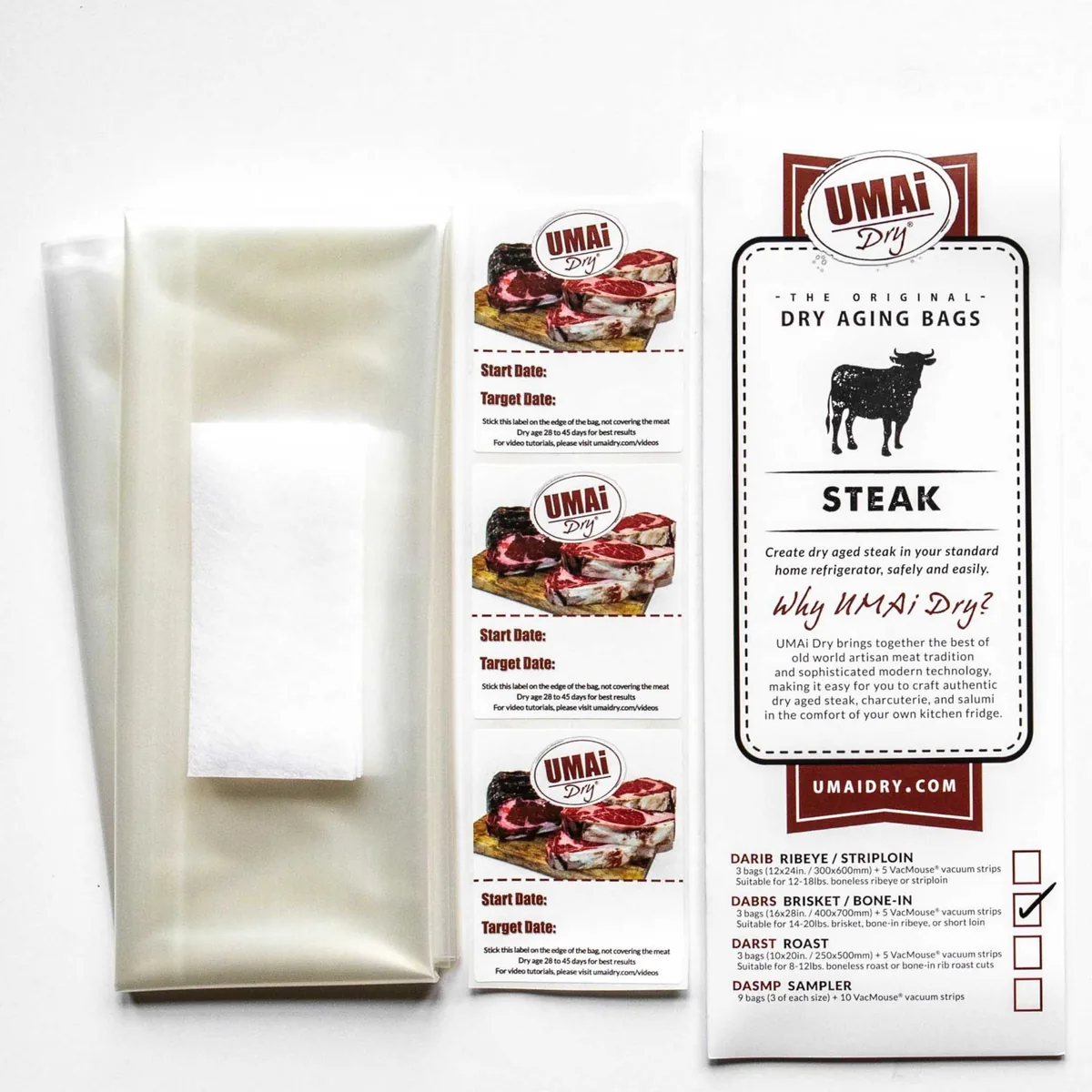
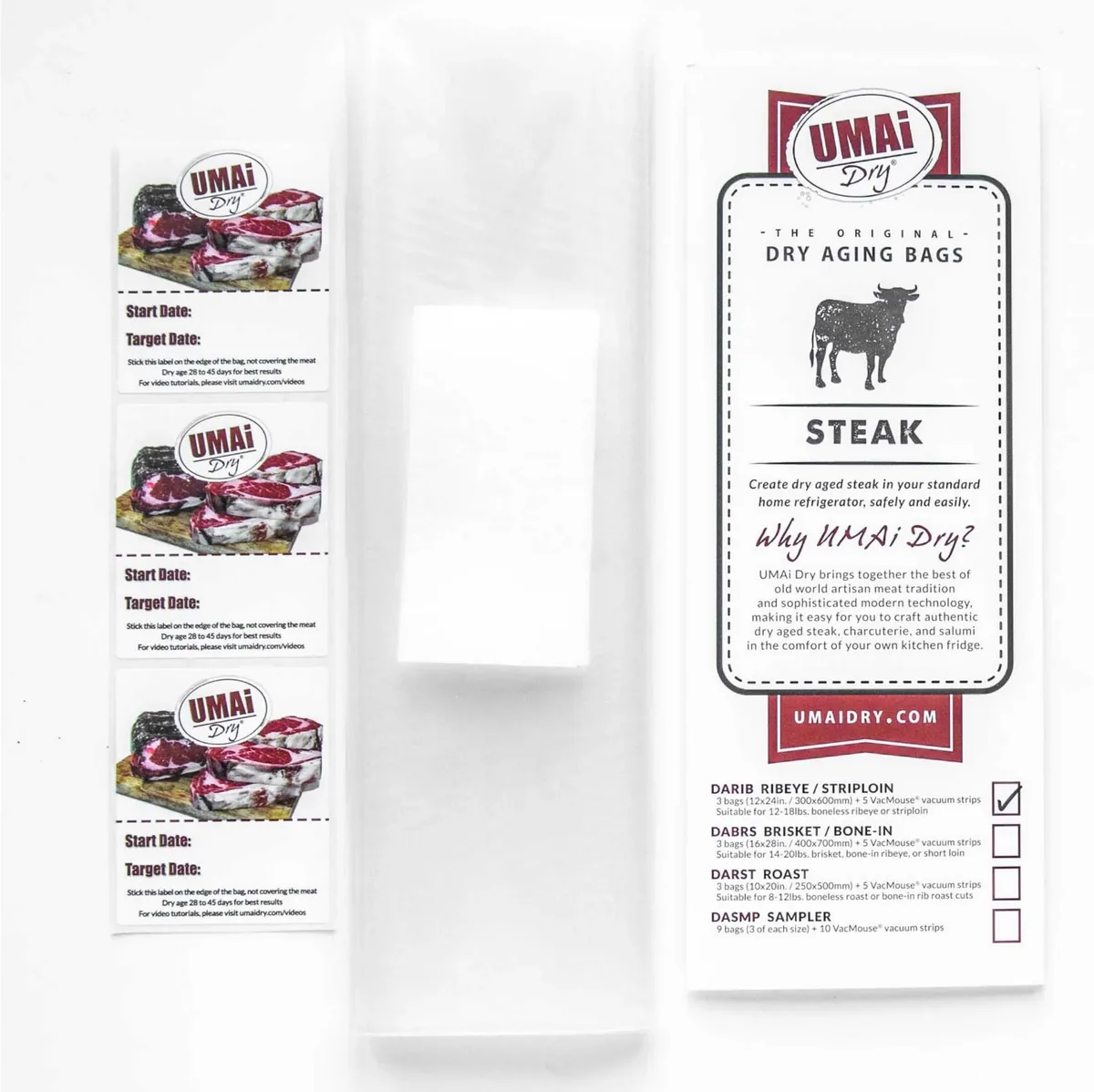
UMAi's largest retail bag, 16 x 28 in, for bone-in ribeye, short loin, sirloin or brisket up to about 20 lb. It is the size to pick when the cut still has bone, which the smaller bags are not sized for. Three bags and five VacMouse strips per packet.

Approx. price

~$34

maker's list price, not a live price

Price per bag

~$11.33

pack price ÷ bags

Largest cut

20 lb

what the maker sizes the bag for

Vacuum sealer

recommended

Best for: An ager working with bone-in rib sections, short loins or whole briskets

Using the bags

Sealing:
Vacuum sealer recommended, per UMAi Dry.
UMAi Dry says:
UMAi: seal with 'either vacuum sealer or immersion sealing method', then rest 'on open wire rack in a regularly used modern frost free kitchen refrigerator located in a room temperature environment for 4-6 weeks'; product pages say 28 to 45 days. Large bag 16 x 28 in (400 x 700 mm); 'Holds approximately 14-20 lbs. of beef'; for bone-in ribeye, short loin, sirloin or brisket.

Bags go in an ordinary refrigerator, so the fridge sets the temperature. Bags against a cabinet

Specifications

Approx. price
~$34 (3-bag packet, $34.00 on umaidry.com)
Type
Dry-aging bags
Price per bag
~$11.33 per bag
Vacuum sealer
Vacuum sealer recommended
Ages
beef

Features, per UMAi Dry

  • 3 Large bags, 16 x 28 in (400 x 700 mm)
  • For bone-in ribeye, short loin, sirloin or brisket
  • About 14-20 lb per bag
  • 5 VacMouse strips for channel-type sealers
  • Ages in a frost-free fridge

Where the specs put it ahead

  • Largest UMAi retail size, fits bone-in subprimals
  • Up to about 20 lb per bag
  • Fridge-shelf method, no cabinet
  • Works with vacuum or immersion sealing

What it gives up

  • Highest per-bag cost of the retail packets
  • Large cuts need a fridge shelf with open-rack airflow
  • Bone edges call for UMAi's bone-guard technique on bulk large bags

The two lists above are drawn from the maker’s own pages and prices, not from owner reports. Where owner discussion has been read it appears in its own section below, so the two are never mistaken for each other.

What owners say

From what 17 owners described in owner discussions between January 2019 and December 2024. Owners rarely say which UMAi bag size they used, so these are reports from owners aging bone-in rib roasts, bone-in ribeyes and briskets in UMAi bags, the cuts this size is made for.

Bones are the recurring problem. Owners aging bone-in ribeyes and rib roasts describe the membrane never bonding around the bones, air filling the bag, and holes appearing within a day of sealing. When the bag does hold, the results are good: a 37-day bone-in ribeye fed 14 people, and a 14.3 lb prime roast gave four 25- to 32-oz bone-in steaks after 42 days.

Brisket gets a mixed but mostly positive report. One owner has done three to about 45 days with great results and another keeps several going at once, while one owner's 22 lb brisket was down to 10 lb after aging and trimming. Briskets taken past an owner's usual 45 days can pick up a stale smell.

Owners who want bone-in steaks without the sealing trouble sometimes skip the bag: one who has done both ages bone-in cuts in cheesecloth. For brisket, the bag remains the easy fridge option owners keep using.
What owners like

  • Bone-in ribeyes come out well when the bag holds: one owner served a 37-day bone-in ribeye to 14 people, and another cut four bone-in steaks of 25 to 32 oz from a 42-day roast
  • Brisket is a repeat cut for some owners: one has done three briskets to about 45 days that all turned out great, and another keeps three to five briskets going at once in a full-size fridge
  • A 64-day brisket in the bag still smoked up juicy for one owner, with the point running with juice when sliced
  • The aroma can be a pleasant surprise: one owner's 21-day choice brisket smelled like buttery pecan pie
  • The flavor on a bone-in roast is noticeable without being overpowering at 45 days, by one owner's account, who planned to go to 60 or 75 days next time

Common complaints

  • The membrane struggles to bond around bones. Owners report no contact at all around the bones of a 13 lb ribeye, a bone-in rib roast that never bonded and filled with air, and moisture still sitting by the bone at day 43
  • Bones and big cuts are hard on the bag: one owner found a hole in a bone-in bag within 24 hours and had to rebag, another expected pinholes after not covering the bones, and a third had a seal fail at day 32
  • One owner who has used both methods finds bone-in aging difficult in UMAi bags and does those cuts in cheesecloth instead
  • Brisket shrinks a lot: one owner's 22 lb brisket was 17 lb after 35 days (15 of them in the bag) and 10 lb after trimming
  • Thin brisket gives less back than a thick loin; one owner with a full packer in a bag wished it had been a strip or ribeye instead
  • Sealing the big bag can cost one: an owner bagging a brisket melted the corners on the first bag and lost it
  • Going past the usual length can go off-note: one owner's fourth brisket, taken to 52 days instead of 45, had a stale old-meat smell rather than a nutty one

Questions owners ask about the UMAi Dry Dry Aging Bags Brisket/Bone-in

Will the bones puncture a UMAi bag?

They can. One owner found a hole in a bone-in bag within 24 hours and rebagged, and another expected pinholes after not covering the bones. One owner who has used the bags four times points to the maker's instruction to pad the bone ends with folded parchment before sealing.

Can I dry age a brisket in a UMAi bag?

Owners do, often to about 45 days. One owner had three briskets turn out great at that length, another smoked a 64-day brisket that stayed juicy, and one owner's 22 lb brisket ended at 10 lb after 35 days and trimming.

How much weight does a bone-in rib roast lose?

One owner's 14.3 lb prime ribeye roast weighed 10.5 lb after 42 days, before trimming, and still gave four bone-in steaks of 25 to 32 oz.

Should I debone before bagging?

One owner advises keeping the bone, both to avoid contaminating the meat while cutting and to reduce waste during the age. Another, who has tried both, finds bone-in cuts hard to get right in the bag and ages them in cheesecloth instead.

Others in the same part of the catalog

More from UMAi Dry →

← Back to the catalog