Dry-aging cabinet, bags, or a spare fridge: which to start with

Short answer

Bags are the cheapest way in: about $5.32 a bag at the low end here, in the fridge you already have. A cabinet starts near $1,000 and adds a fan, its own temperature control and, on 17 of 26 models, active humidity control.

What each one is

A dry-aging cabinet is a refrigerator built around airflow: a fan moves air over meat on open shelves or hooks, the temperature holds near freezing, and on some models a humidifier and dehumidifier hold a humidity set-point. A salt block, where fitted, is there for the maker's stated reasons, usually airflow and odor; it is not a humidity controller.

A dry-aging bag is a membrane permeable to water vapor. Sealed around a cut, it lets moisture leave while keeping the surface covered, so the cut can sit on a shelf in an ordinary refrigerator. Savini et al. (2024) note that both the USDA and the EU definitions of dry aging include meat packed in bags permeable to water vapor.

The DIY route is a spare refrigerator with a small fan, a separate thermometer and hygrometer, and often a temperature controller. It is cheaper than a cabinet and gives up the cabinet's purpose-built airflow, its controls and its warranty.
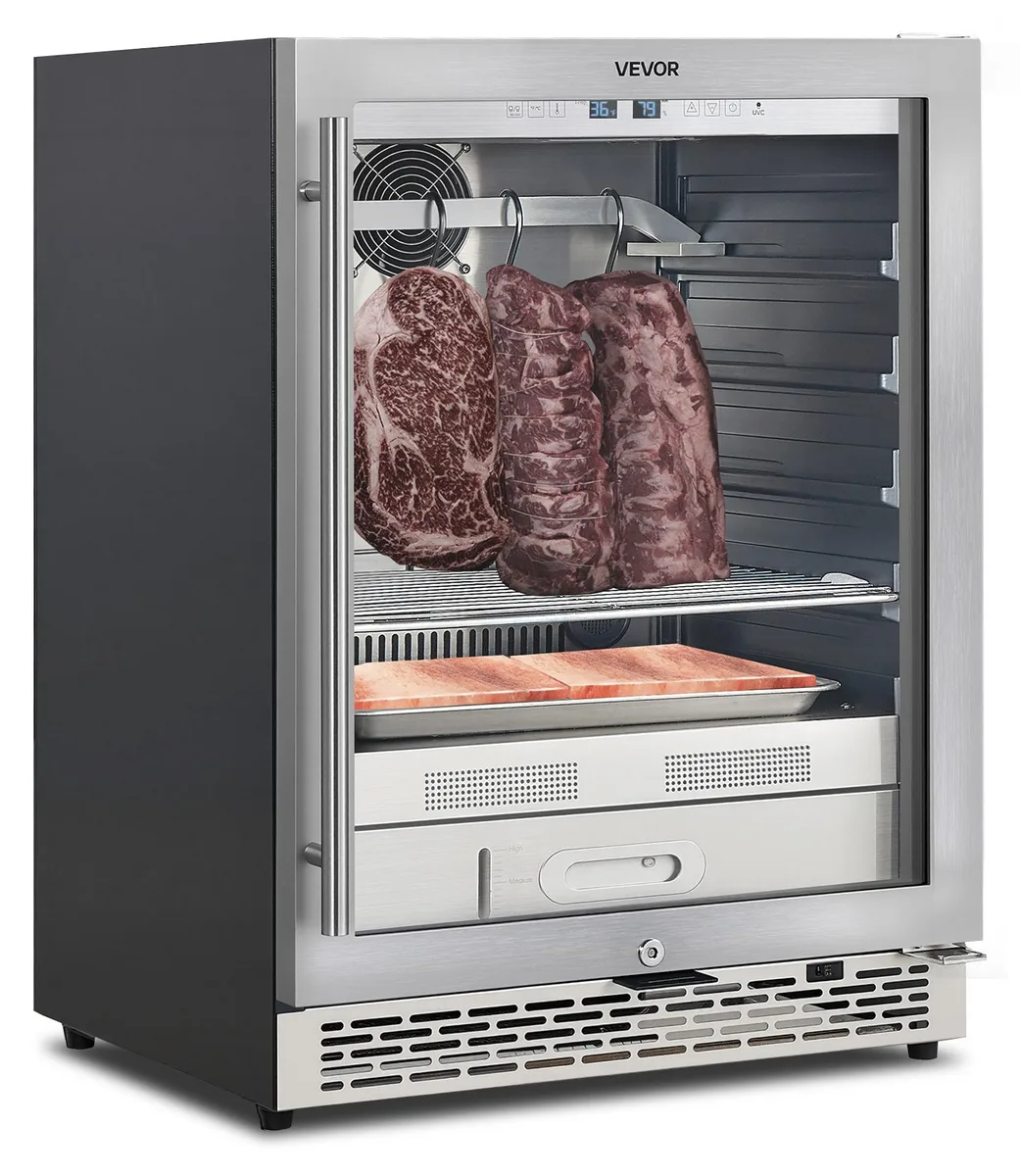
What it costs, from the catalog

The cheapest cabinet here is the VEVOR 99 LBS Dry Aging Fridge at about $1,000; the median cabinet lists at $3,057. At the lowest price per bag in the catalog ($5.32, the UMAi Dry Bulk Small Dry Aging Bags), the cheapest cabinet costs the same as 188 bags.

9 of the 10 bag packs here call for a vacuum sealer (required or recommended by the maker), which is a cost to add if you do not own one.

Who each suits

Bags suit a first try, a single roast or rib section a few times a year, and anyone without space for another appliance. Each cut occupies a fridge shelf for the weeks it ages, and every batch needs new bags.

A cabinet suits someone who will age repeatedly, wants to age larger cuts or several at once, or wants to try charcuterie, which several cabinets list as a mode. It is the only one of the three whose maker publishes a temperature range and a humidity system for it.

Sources

Maker claims quoted on this page are the maker’s own and are labelled as such. This page is general information, not food-safety advice for any product.

Cabinets and bags this comes up with

Related