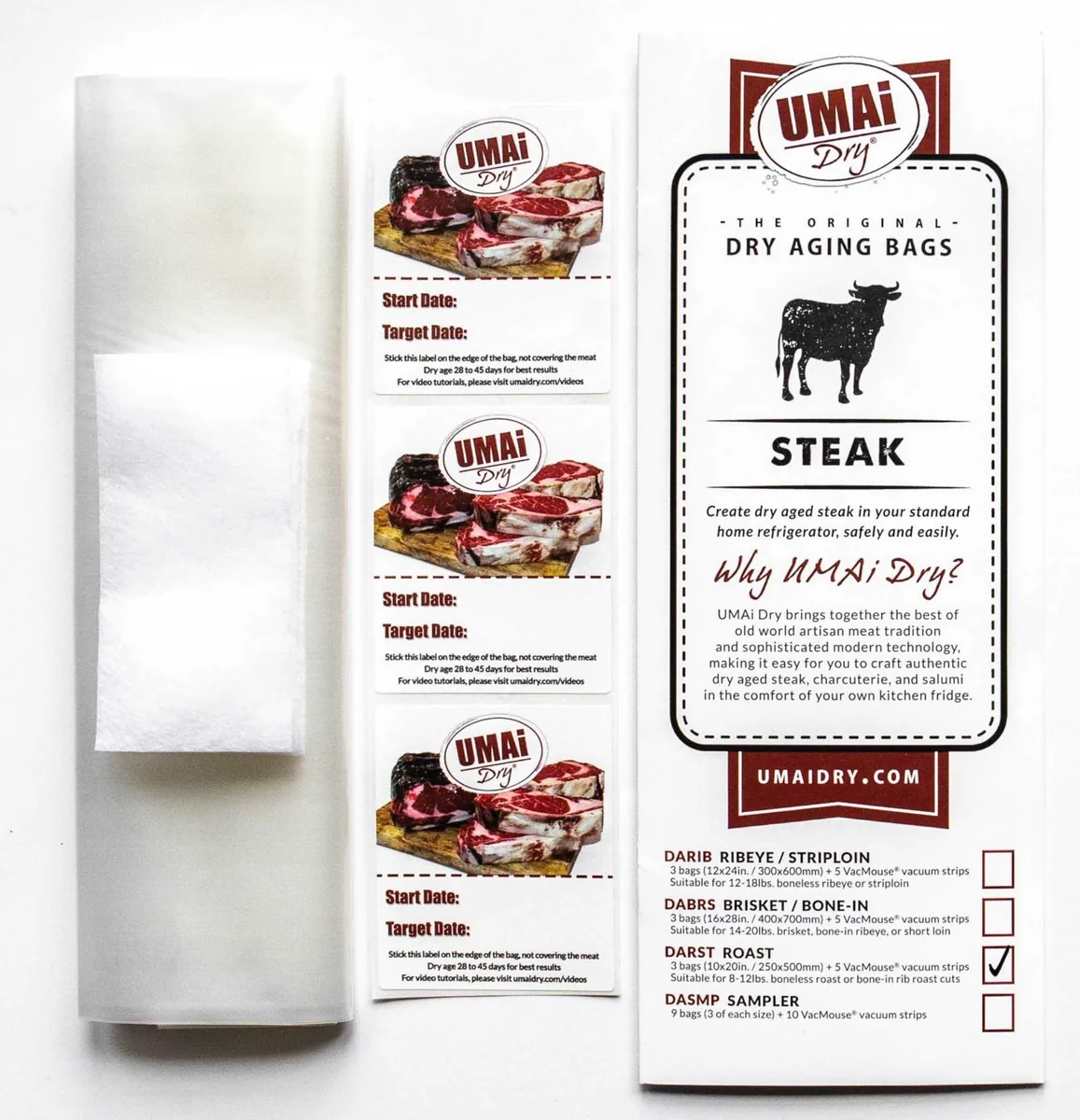
UMAi Dry~$26
UMAi Dry Dry Aging Bags Roast
Dry-aging bags · vacuum sealer recommended
- Largest cut
- 12 lb
- Price per bag
- ~$8.67
- 3 bags per pack
- 8-12 lb cuts
- 2-3 bone rib roast
Best for: Someone aging a holiday rib roast rather than a whole subprimal
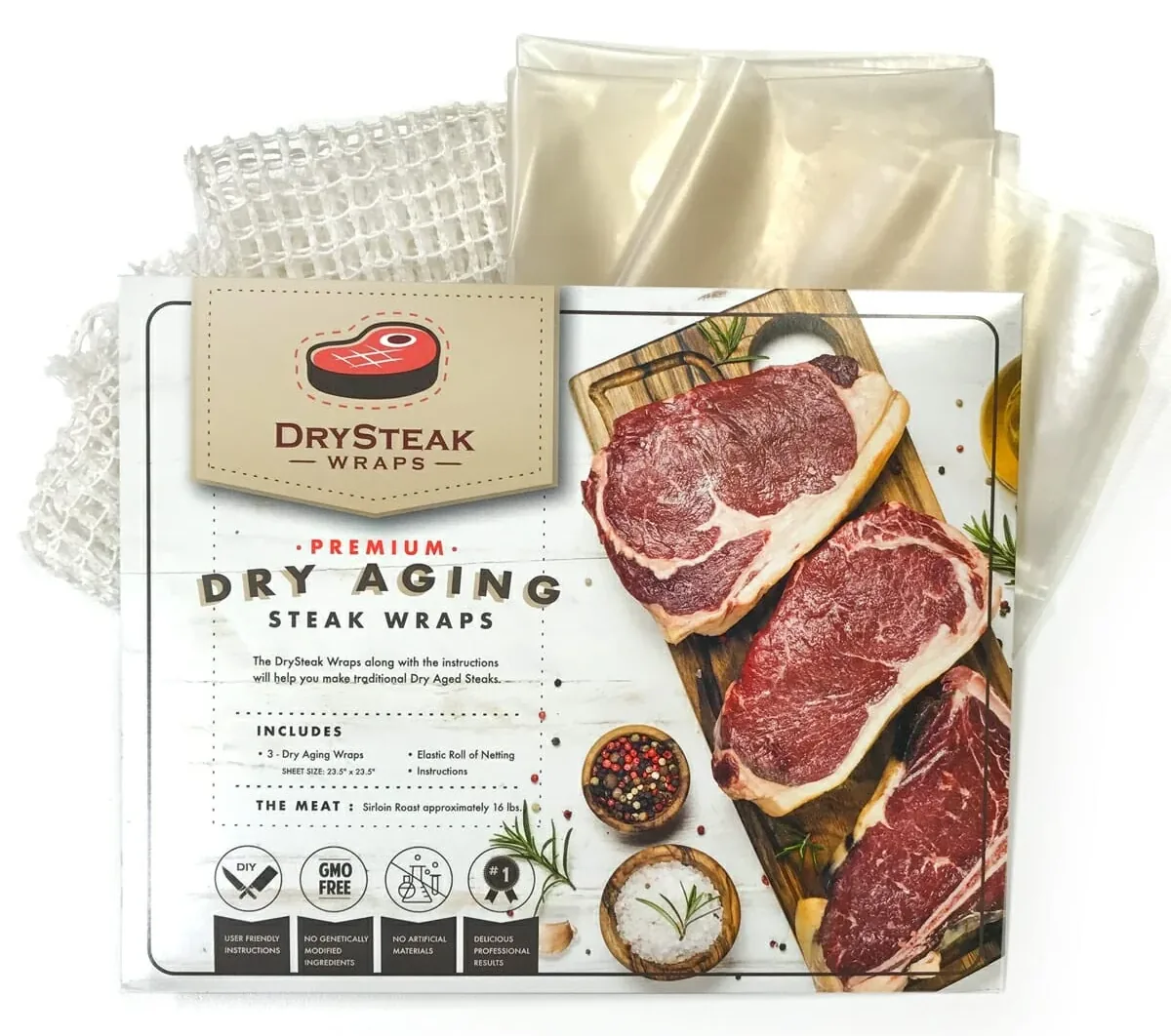 Dry-aging bags~$22
The Sausage Maker
Instead of a bag, these are plant-based breathable sheets wrapped around the cut and held on with elastic netting, so no vacuum sealer or immersion step is involved. Each pack has three 23.5 in square wraps, each sized for a 14-16 lb sirloin or ribeye roast. The Sausage Maker puts the aging time at about four weeks in a home fridge.
Approx. price
~$22
maker's list price, not a live price
not needed
Best for: A cook without a vacuum sealer who wants to age a sirloin or ribeye roast in the kitchen fridge
Bags go in an ordinary refrigerator, so the fridge sets the temperature. Bags against a cabinet
The two lists above are drawn from the maker’s own pages and prices, not from owner reports. Where owner discussion has been read it appears in its own section below, so the two are never mistaken for each other.
From what 15 owners described in owner discussions between November 2019 and March 2026. Counts owners of the DrySteak wrap-and-netting kit only; The Sausage Maker's separate collagen sheets and other brands' bags are excluded.
A 23.5 in sheet, a tube of netting and a rack in any fridge is the whole method, and that simplicity is what owners like. No vacuum sealer is involved, the netting keeps a roast round instead of flattening it, and one owner who tasted a 45-day wrapped cut against a friend's cabinet-aged beef found the flavor the same.
Handling is the catch. The film tears if it gets too wet or is worked too much, which one owner learned on a brisket, and it bonds to the meat so completely that it comes off with the trim. Dips and folds in the cut can leave air pockets where the wrap never makes contact.
Owners run them on prime strips, rib roasts and briskets for 38 to 60 days, in basement, beer, wine and family fridges. Owners who have tried UMAi bags as well split both ways: two prefer the wraps, while one owner who struggled with a sirloin roast planned to switch to bags.
No. Owners wrap the cut, pull the netting over it and set it on a rack. One owner skips the instruction to wet the meat first, finding the meat's own moisture enough to make the film stick.
Owners do. One uses the wraps in a regular fridge with no fan or water, another aged a brisket 38 days in the family fridge, and one ran a 45-day rib roast in a beer fridge holding about 39°F and 40-55% humidity.
Owners disagree. Two who have used both prefer the wraps for being easier to seal and for keeping the roast's shape; one owner who had a good result in UMAi bags had air pockets with the wraps within days, and another planned to switch to bags.
No. It becomes part of the pellicle and is trimmed off with it. One owner found it too brittle to remove and took a thin layer off with it; another saw it melt into the fat and decided not to render those scraps.
One owner who wrapped single grocery-store ribeyes and aged them about three and a half weeks ended up throwing them out and planned to start again with a whole roast.
Dry-aging bags · vacuum sealer recommended
Best for: Someone aging a holiday rib roast rather than a whole subprimal
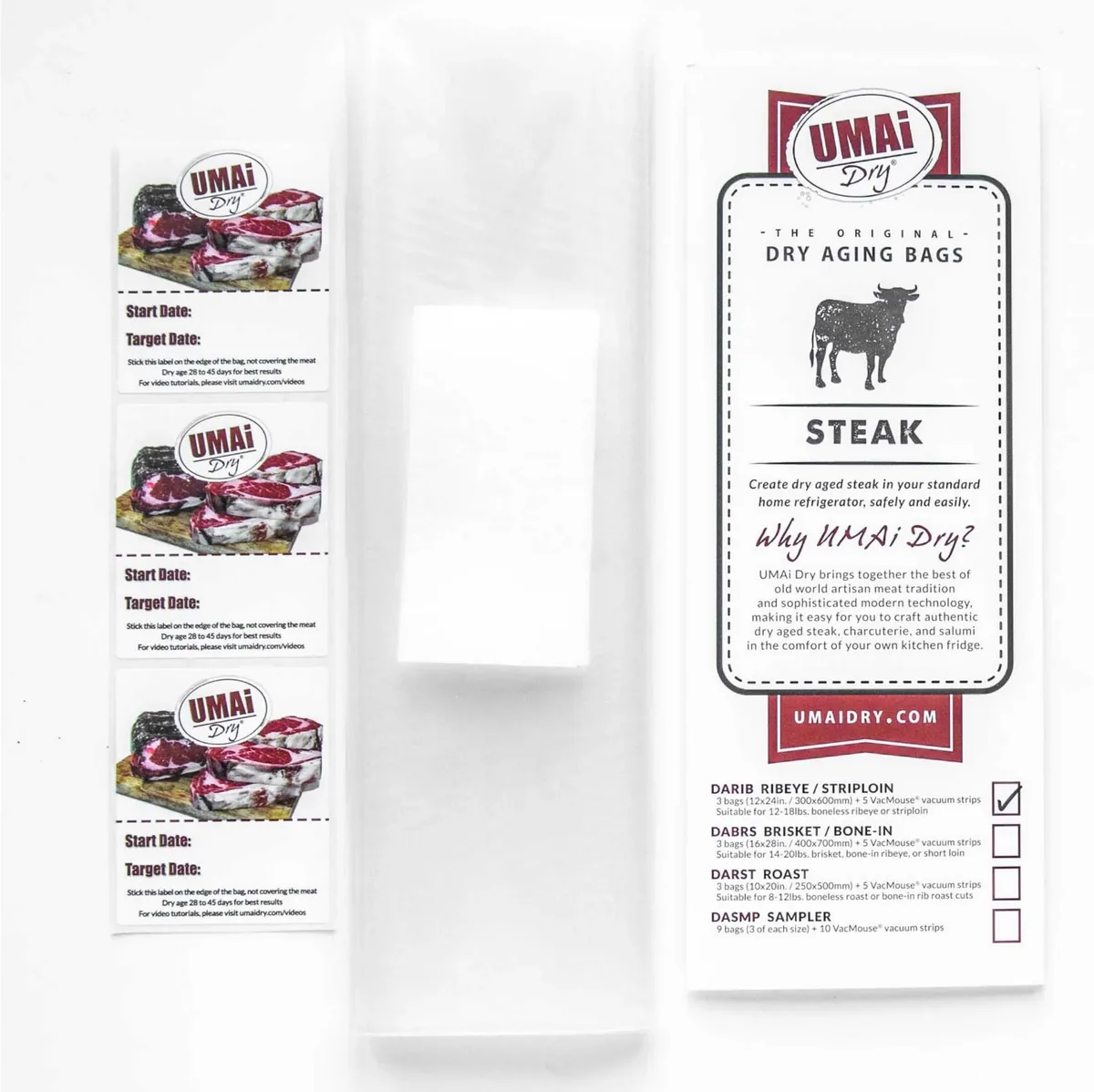
Dry-aging bags · vacuum sealer recommended
Best for: A first-time ager with a boneless ribeye or strip loin and a spare frost-free fridge shelf
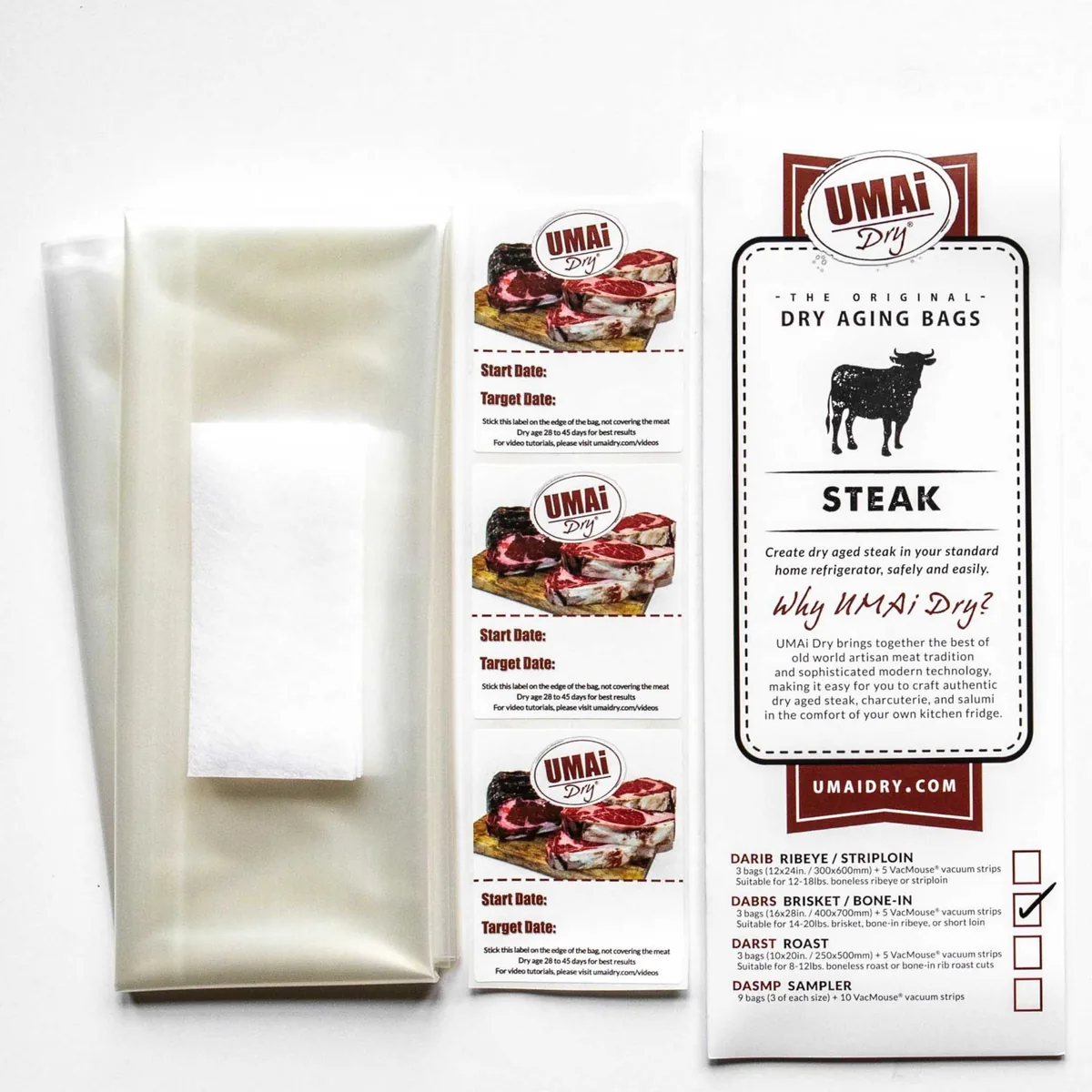
Dry-aging bags · vacuum sealer recommended
Best for: An ager working with bone-in rib sections, short loins or whole briskets