How long to dry-age, and how much meat you lose doing it

Short answer

The research literature most often reports 14 to 40 days for dry-aged subprimals. Expect to lose weight twice: 6–15% to drying and 3–24% to trimming the bark, per a 2016 review.

How long

Dashdorj et al. (2016), reviewing the literature, report that the most frequent range for dry-aged subprimals is 14 to 40 days, and that most purveyors age at least 21 days. Savini et al. (2024) summarise that tenderising enzyme activity is highest in the first 7 days, with the largest tenderness gains by about 14 days; longer aging is mainly about flavor.

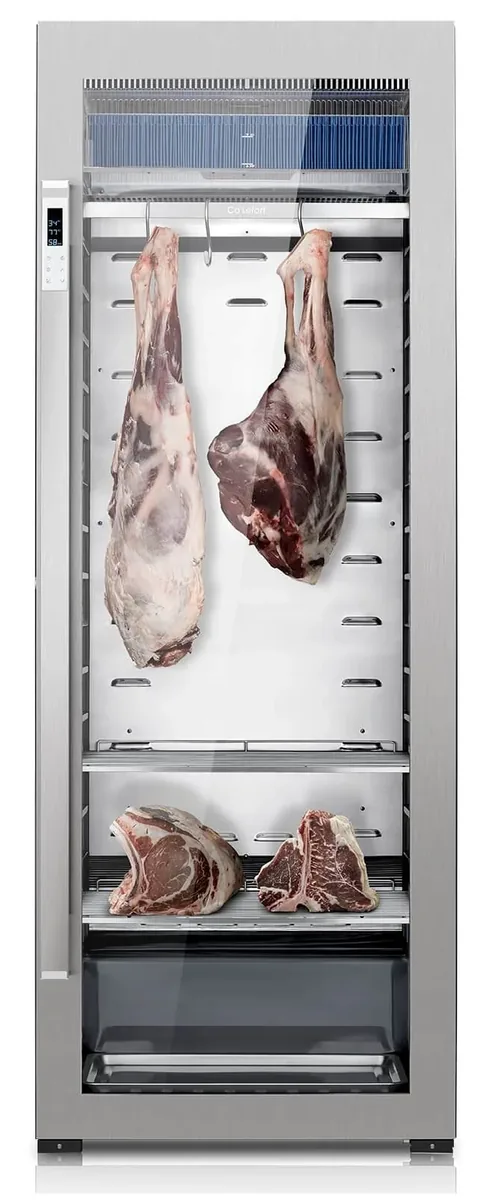
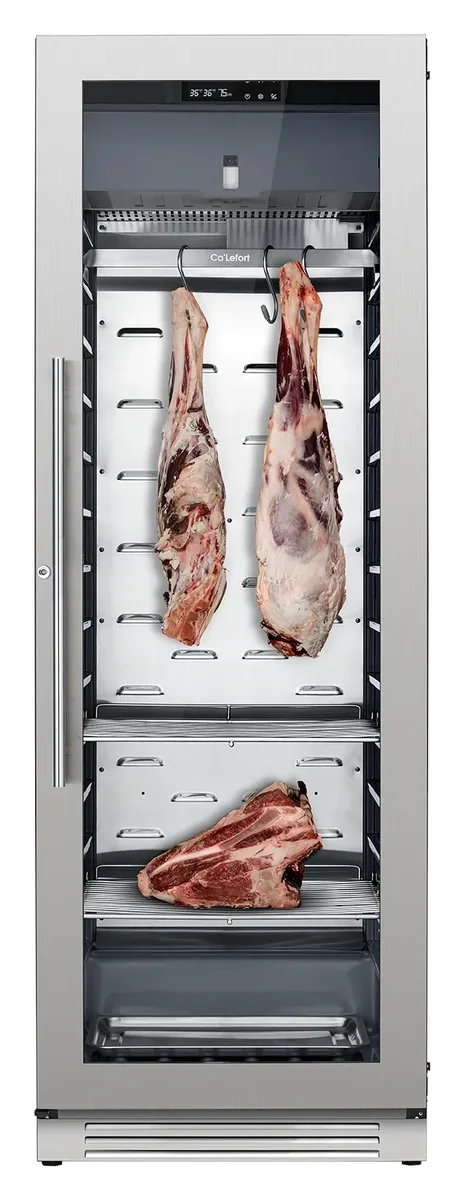
Makers of bags and cabinets publish their own guidance, and it is shown on each product page in the maker's words.

What it costs in meat

The same review puts aging shrinkage at 6–15% and trim loss at 3–24%. Both rise with time and with airflow and low humidity: a drier surface makes a thicker crust, and the crust is trimmed off before cooking.

A worked example: the median stated meat capacity among cabinets here is 155 lb. Filled with 155 lb of meat, the low end of both ranges leaves about 141 lb to cook and the high end about 100 lb.

Buying with that in mind

The crust forms on every exposed surface, so the smaller the cut, the larger the share of it that is trimmed away. A cabinet's stated meat load is the figure to compare when deciding how much you will age at once; interior litres are not.

Sources

Maker claims quoted on this page are the maker’s own and are labelled as such. This page is general information, not food-safety advice for any product.

Cabinets and bags this comes up with

Related